Pumcha / 2025 – now
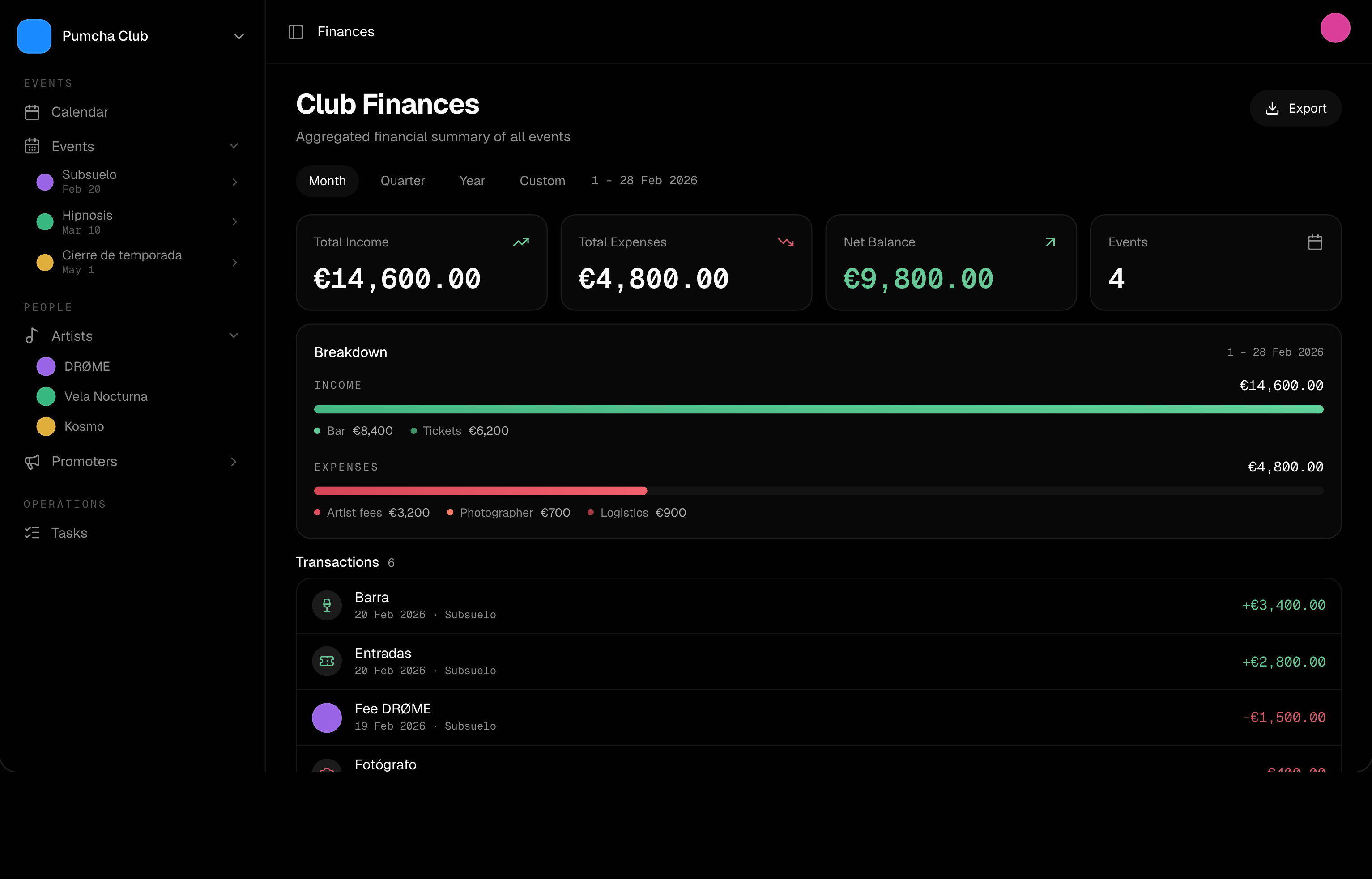
A nightclub books artists, pays them, feeds a door list and finds out at the end of the month what the night made.Every one of those jobs was living in a different tool. Pumcha puts them in one. I designed it, built it, and it is live and billed.
The problem
I talked to people running clubs in Madrid and the answer was the same every time. Booking details in WhatsApp. Contracts in email. Transport in a spreadsheet. What was actually paid, in someone’s head.
None of that is a filing problem. It is that the numbers never close. A night can look good and lose money, and nobody finds out for weeks because the fee, the flights and the bar take are in three documents nobody joins up. Every handover loses half the context.
If the information lives everywhere, it lives nowhere.
What it does
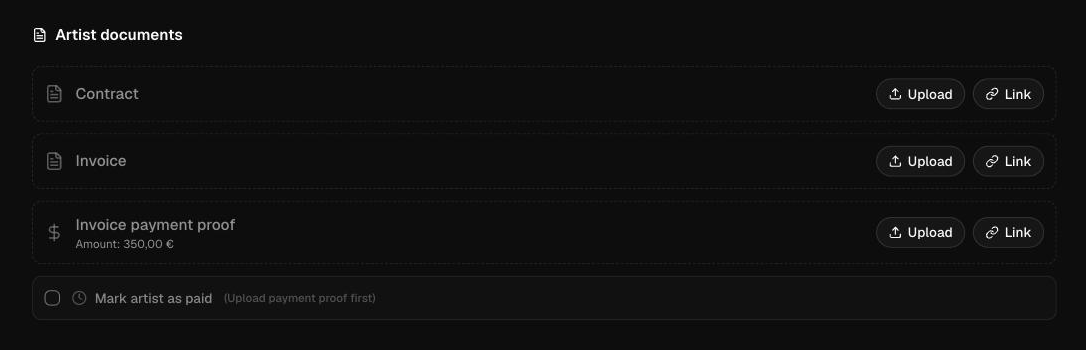
Ten modules, built to reference each other. An artist on a night carries their fee into that night’s result. A document attaches to both the artist and the event. Nothing has to be typed twice, which is the only reason the numbers stay true.
01 / Money
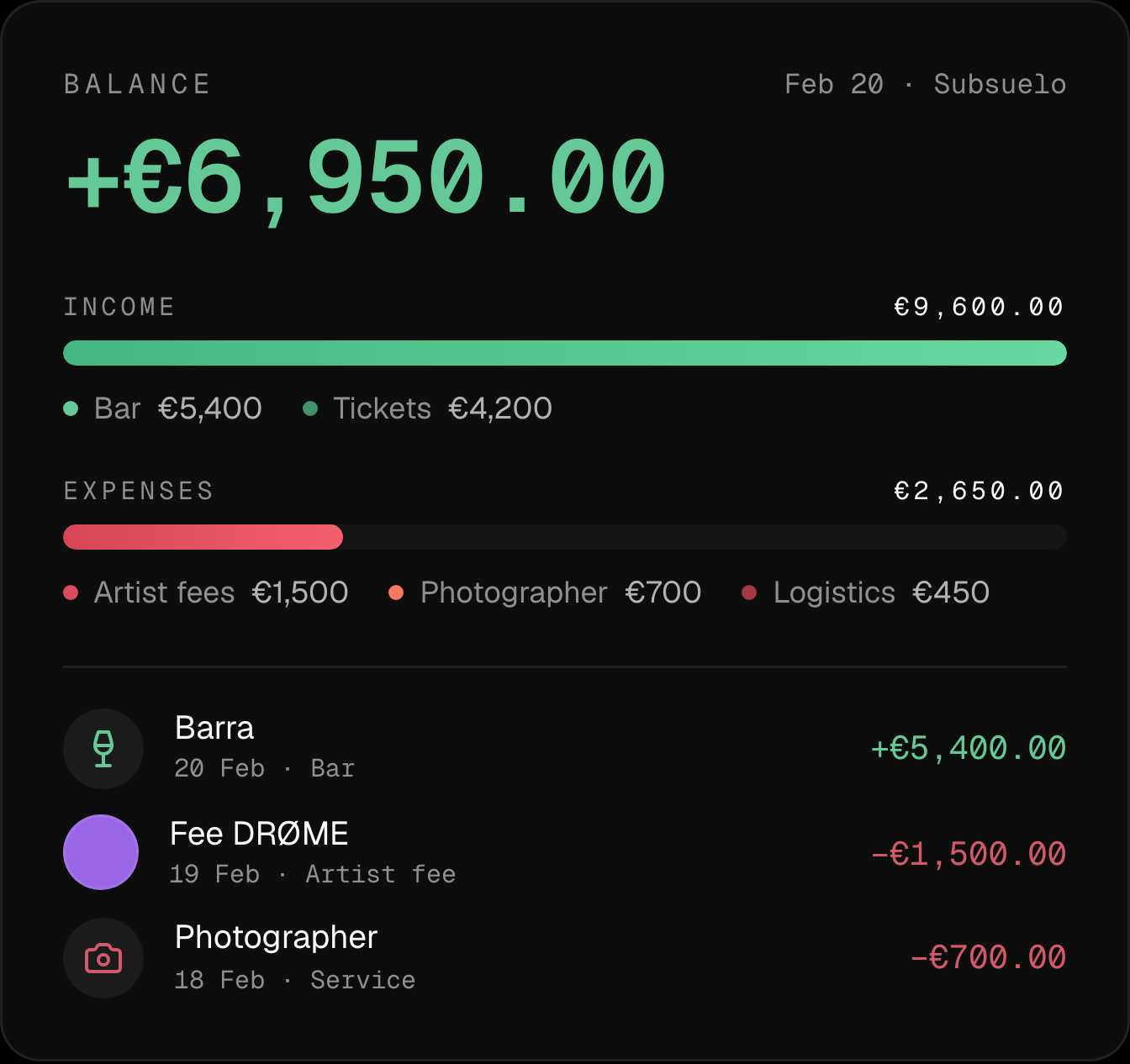
Fees, supplier costs, bar and ticket income all post against the event that caused them. The result is a per-night profit and loss that is right because it was never assembled by hand.
02 / Talent
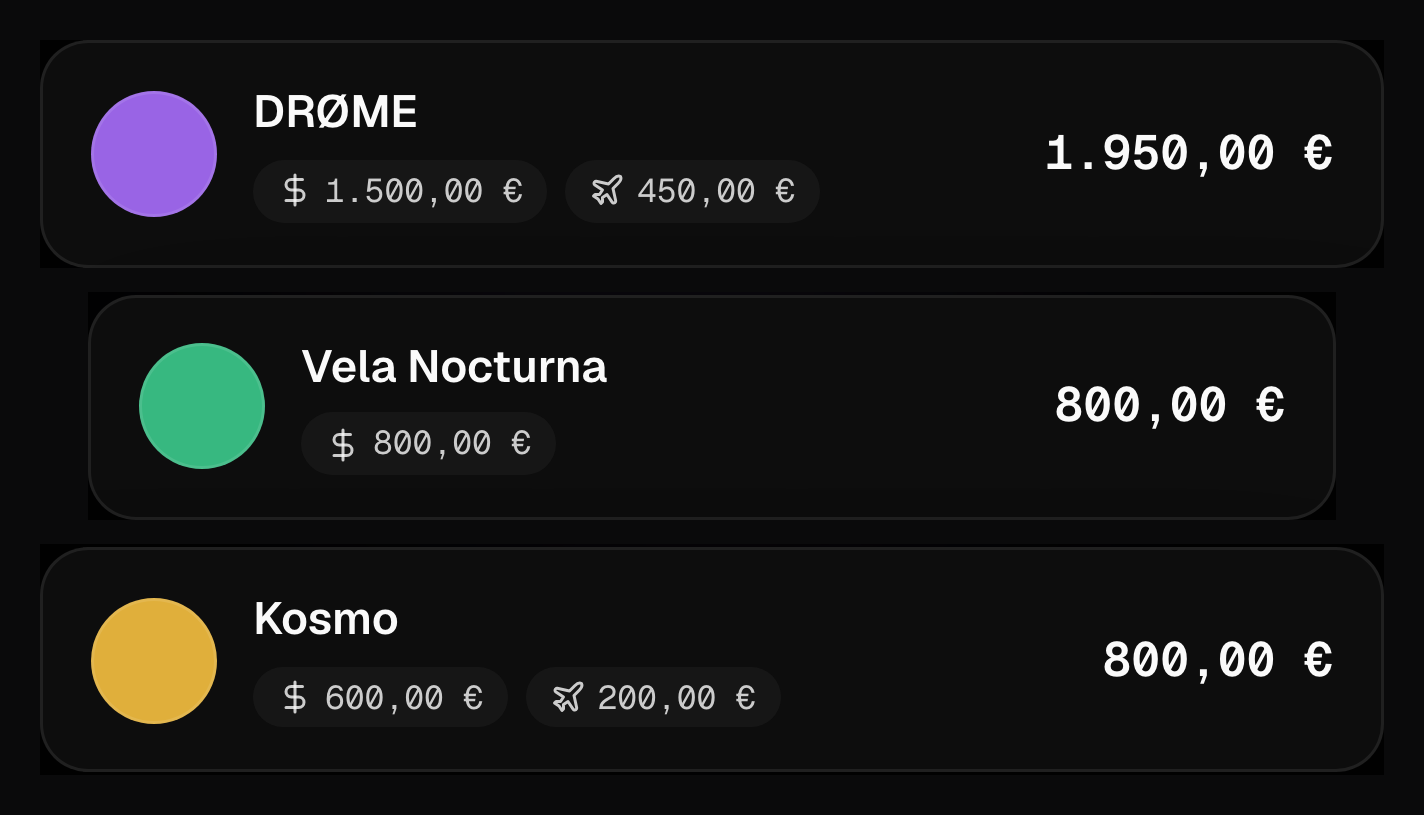
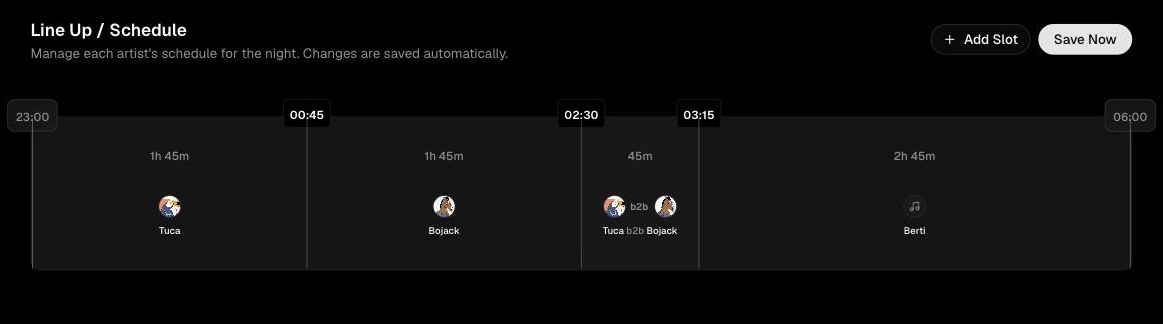
An artist added to a night brings their fee, their travel and their accommodation with them, and those roll straight into the event total. The same lineup becomes the run sheet the team works from on the door.
03 / Files
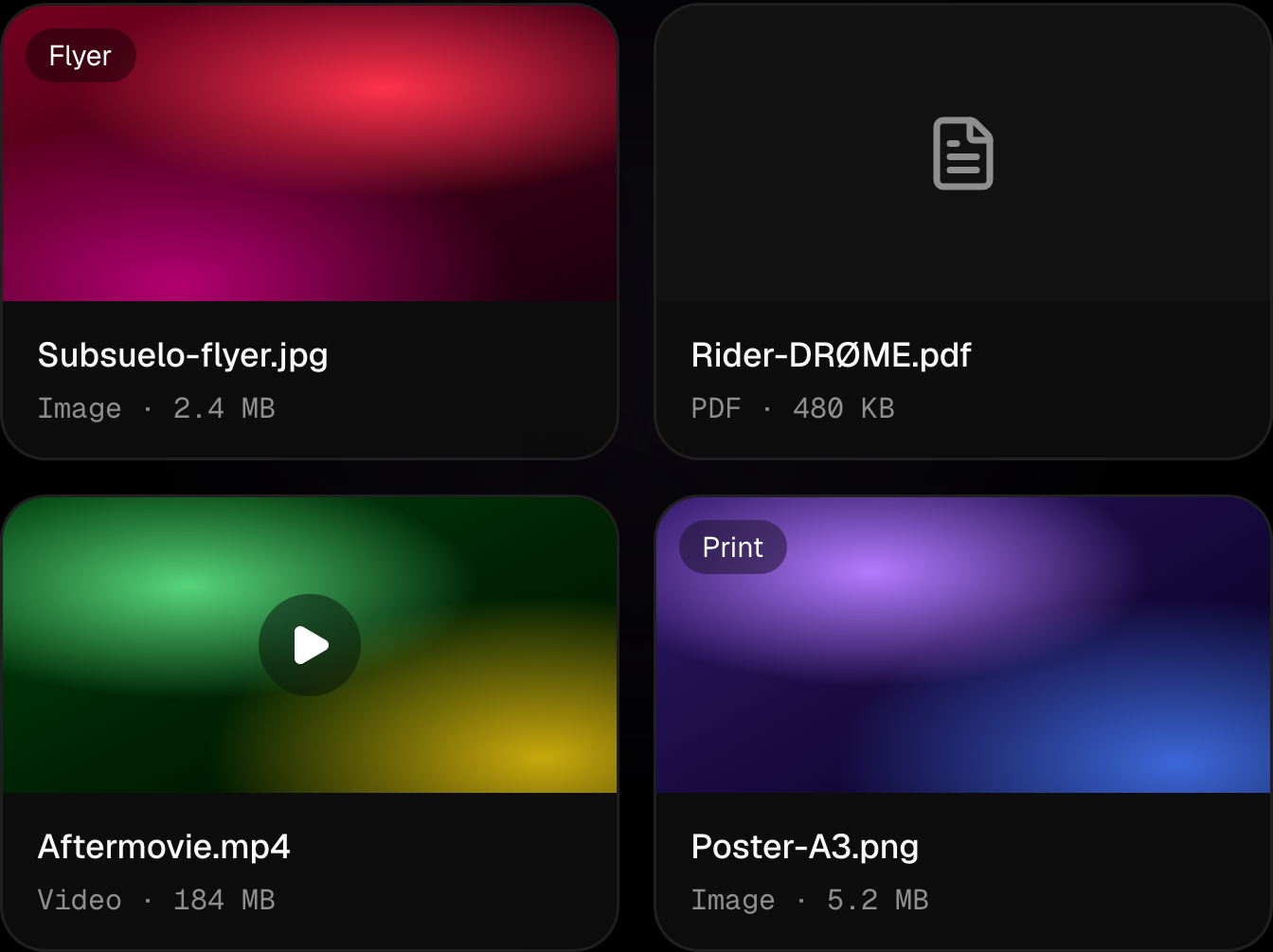
Flyers, riders, contracts, photos and the aftermovie all attach to the event that produced them. A club does not lose files, it loses the thread between a file and a night, and that is the thing being stored here.
The shift
The product is one argument repeated in every module. Wherever a club was re-typing something, that was the place a number went wrong.
BeforeSpreadsheets and chat
AfterPumcha
The build
Every choice here buys the same thing: fewer moving parts to hold in one head. Managed services wherever a managed service exists, and types everywhere, because there is nobody else to catch the mistake.
Where it is
Two clubs run on Pumcha today and pay for it every month. It is a small number and I would rather give it to you than round it into something vaguer. What it buys is the only test that counts this early: the product has been through a real season, with real money moving through it. The plan is to put more venues on in September.
What I do not have is a usage curve. Two clubs is too few for anything I measured to mean much, and a figure from that base would not survive the second question. The product is open, so the honest thing is to go and look at it.
pumcha.com is the marketing site. app.pumcha.com is the product.