TruequeGo / 2025 – now
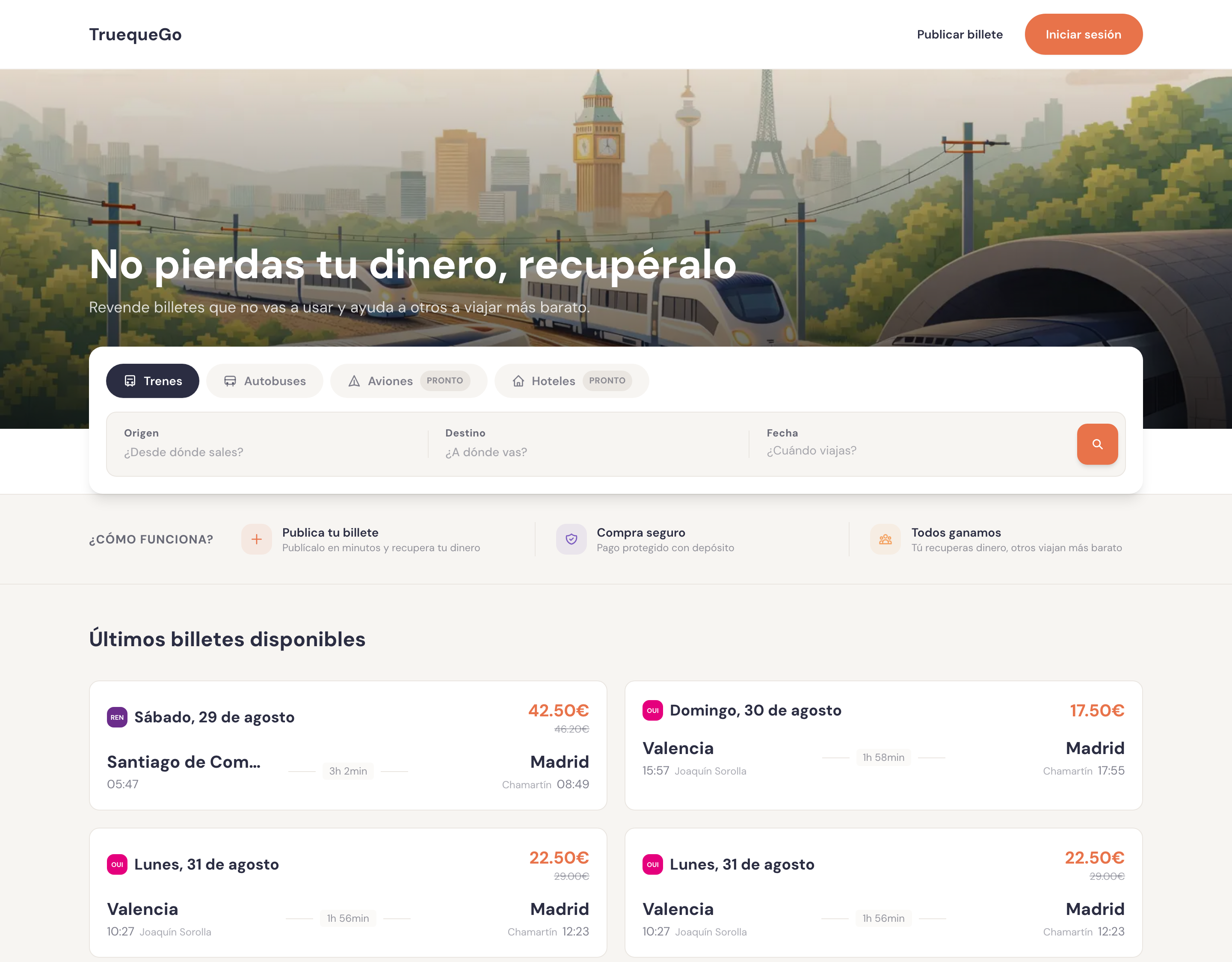
Spain’s cheapest high-speed fares are the ones you cannot get back. Ouigo, Avlo and the lowest Renfe and Iryo tickets refund nothing, so a plan that changes is money gone.TruequeGo moves that seat to someone who can use it, at or below what it cost. I designed it, built it and shipped it.
The problem
The fares people actually buy in Spain are the restricted ones, and the price is low precisely because there is nothing to claim back. Plans change anyway, and the fare is simply kept. On the same day, on the same train, somebody else is paying whatever that route costs that morning: Madrid to Barcelona officially runs €35 to €120 and passes €100 on peak dates.
Two strangers lose to the same journey. One paid for a seat they will not sit in, the other pays full price for it.
01 / Finding one
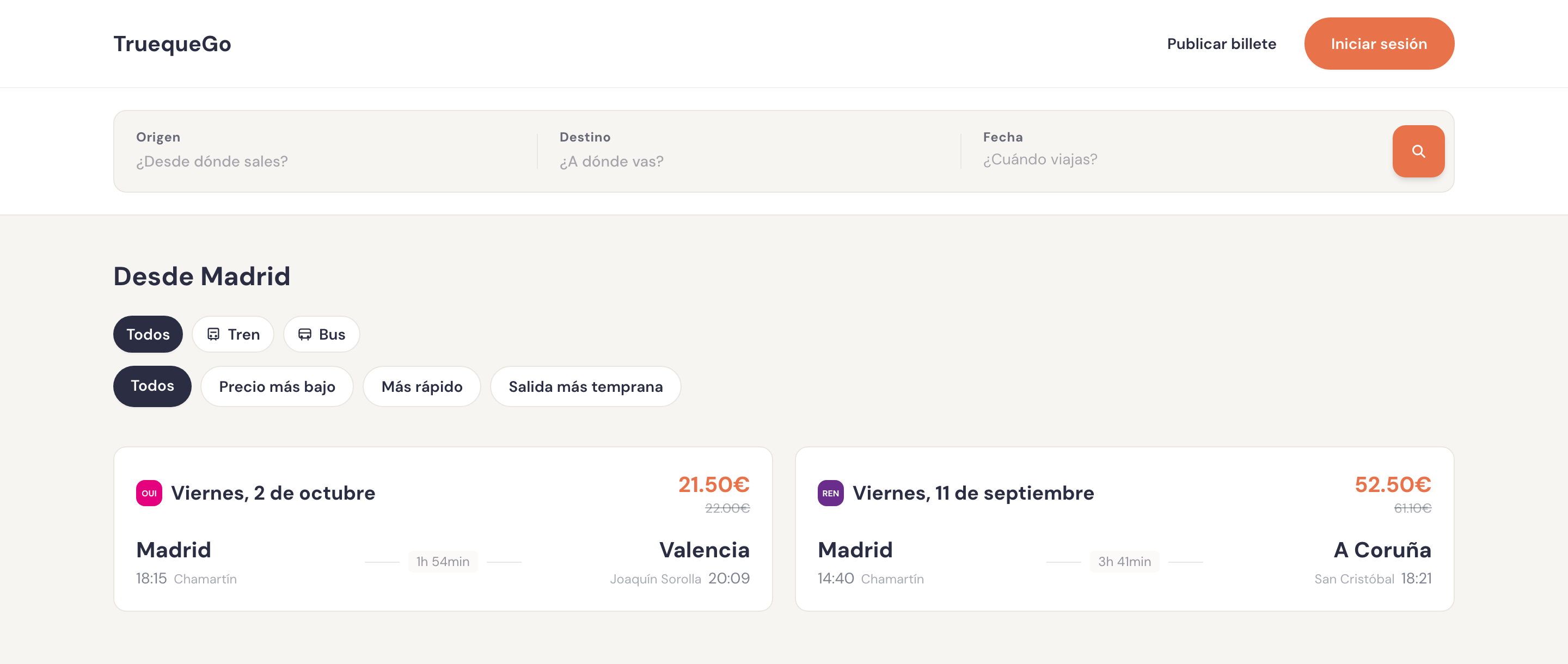
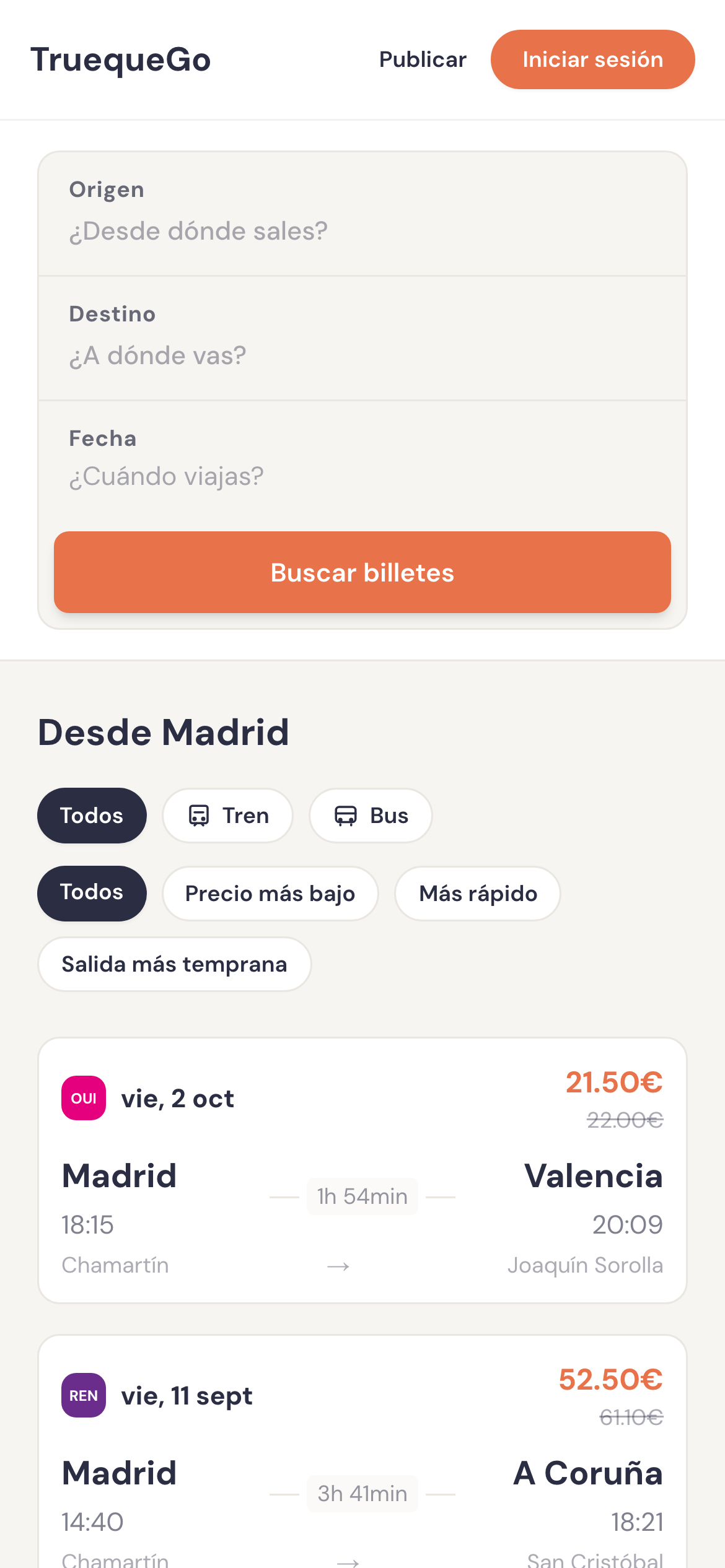
A resale card answers one question before any other: is this cheaper, and by how much. So the asking price and the original fare sit together on every card, the original struck through. Everything else is what makes a train ticket a train ticket, and the sort is by price, duration or departure.
02 / The ticket
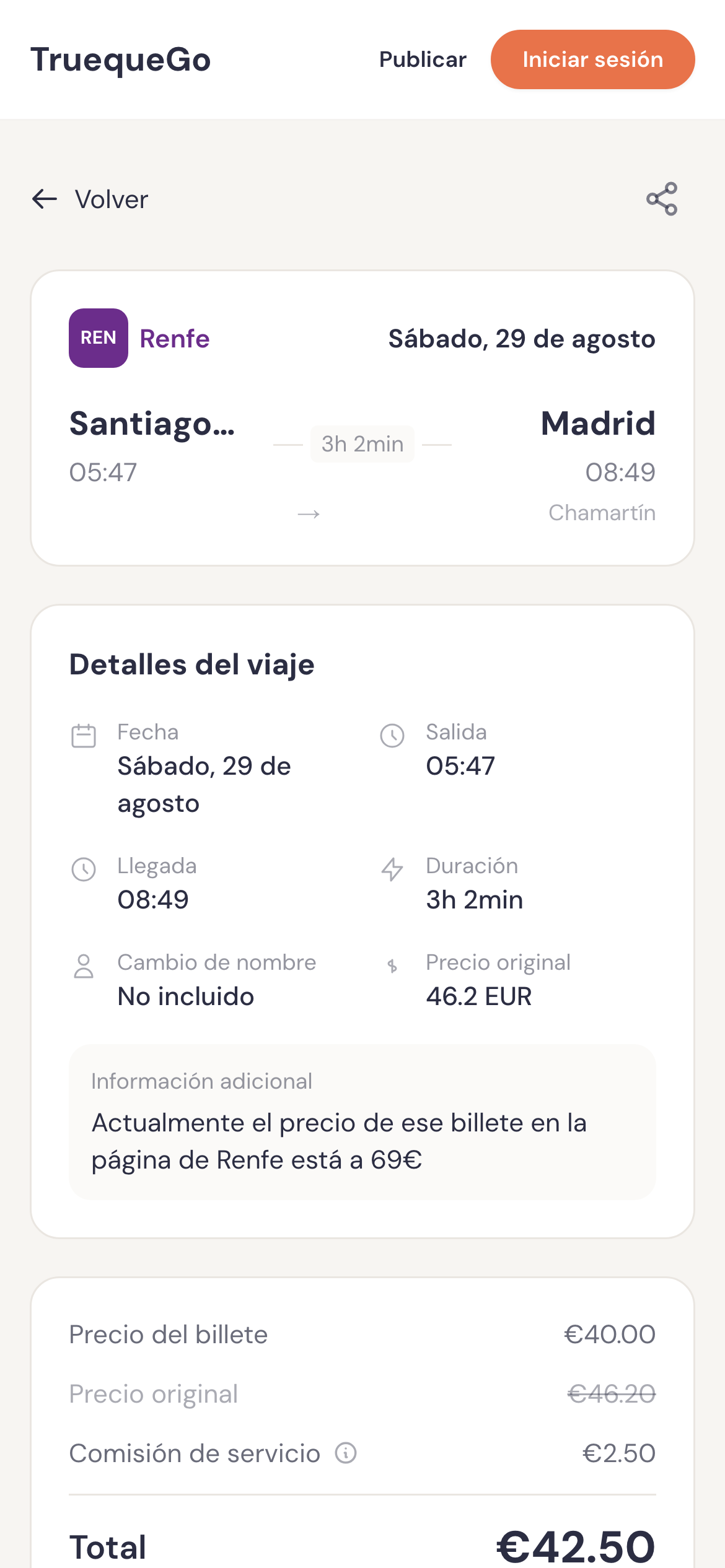
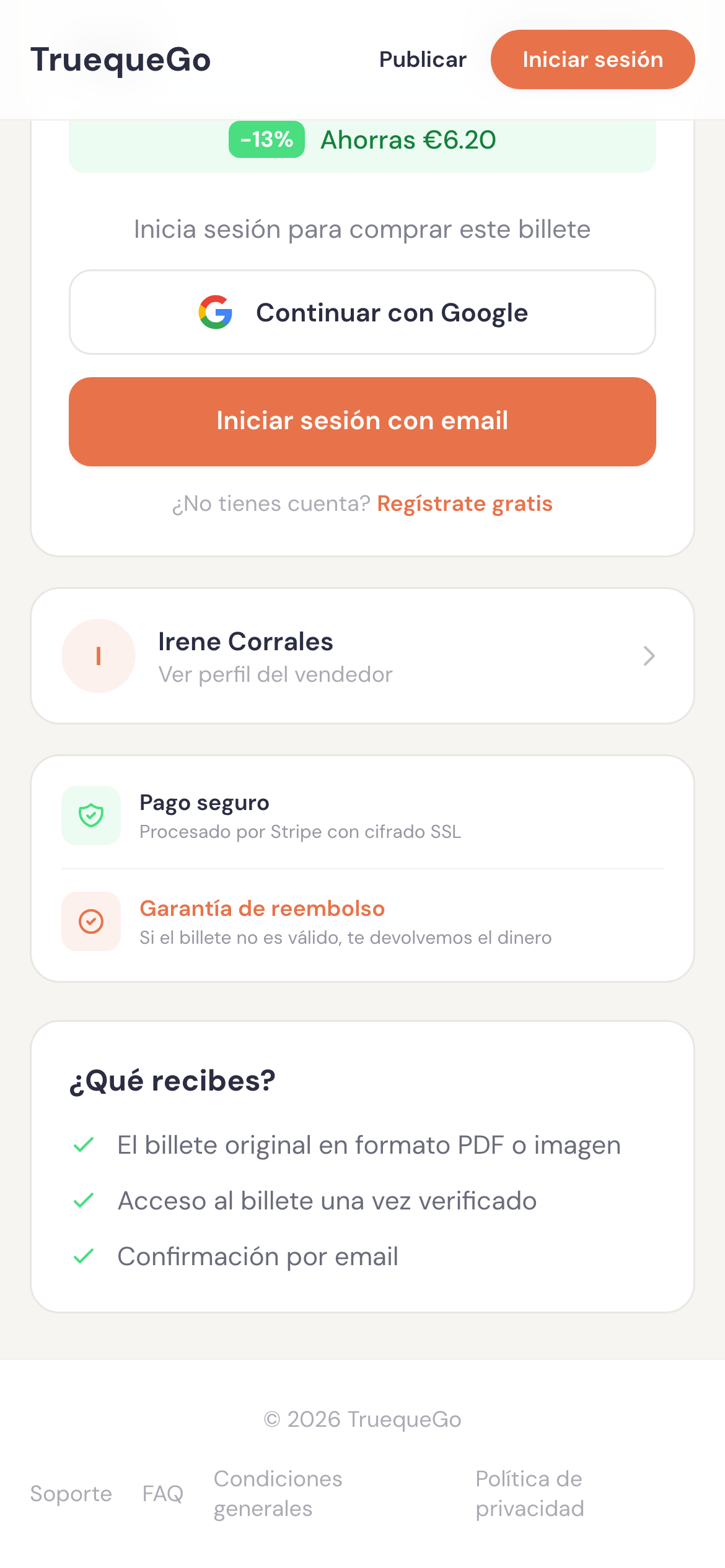
The listing splits on the only two things being decided: whether this is the right train, and whether the price is good. The money column reads as a ledger rather than a price tag, and the sign-in wall sits at the end of it. The page prices itself and names the seller while you are still a stranger.
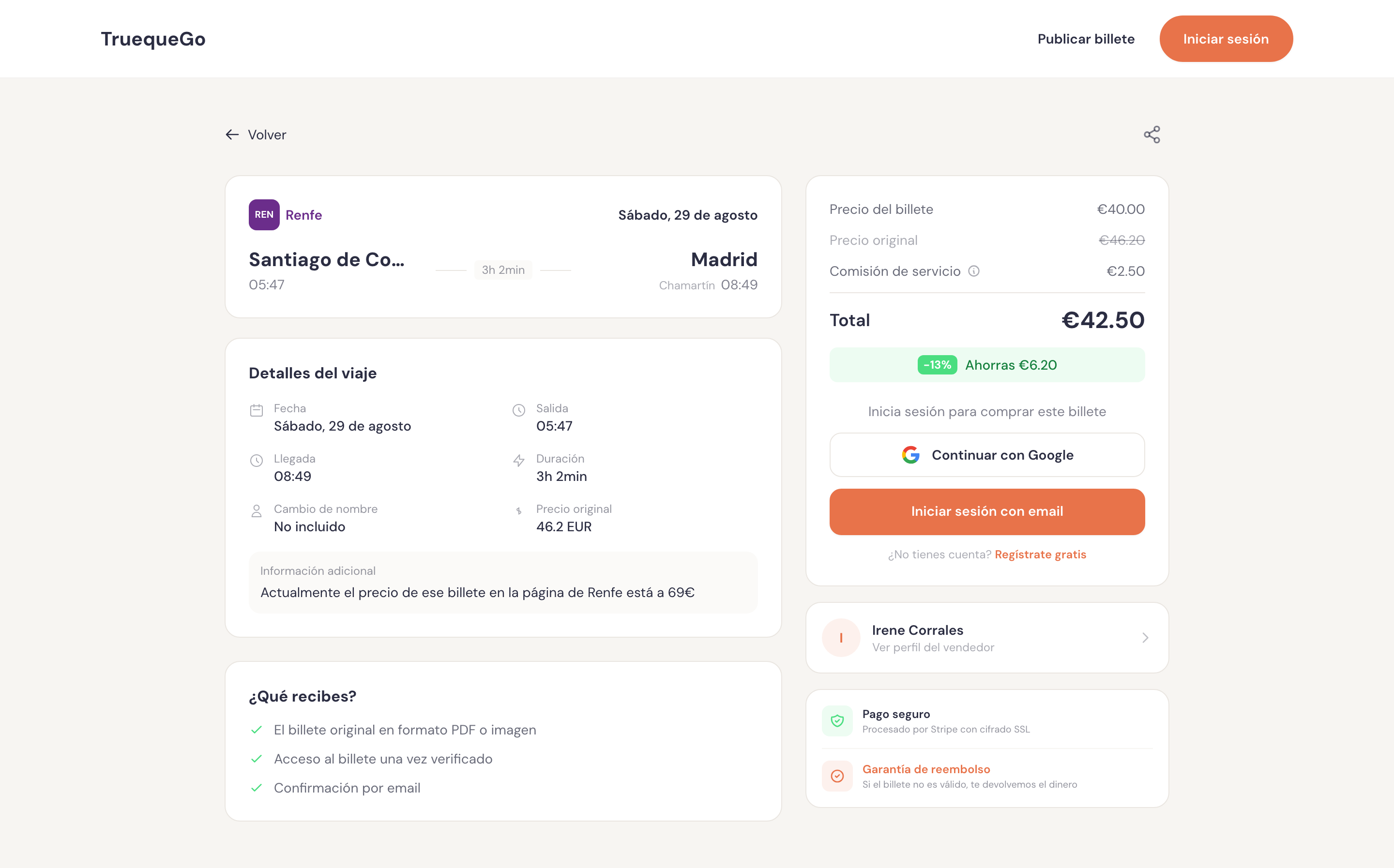
The field that decides whether any of it works is Cambio de nombre. Operators disagree on name changes, and that one fact decides whether a buyer can board. So it is a labelled field next to the date and the duration, reading included, paid by the buyer, or not needed, and it is answered before the price does any persuading.
The rule
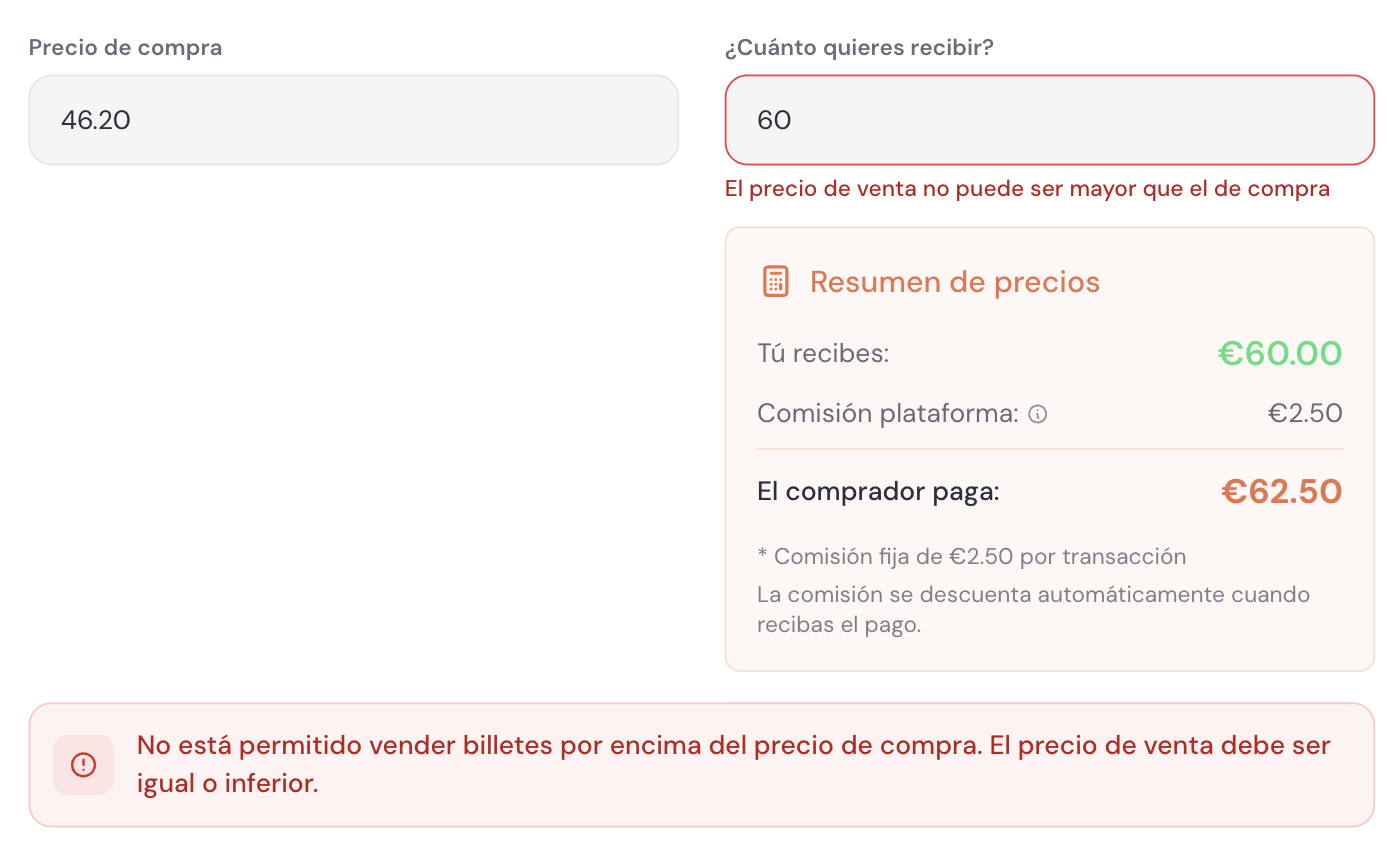
This is the decision the rest of the product sits on, and it is a real cost. A cap on the asking price is a cap on supply, on the size of the market and on what the platform can ever take.
The obvious versionFree pricing
ShippedCapped at the original fare
03 / Trust
A buyer is paying a stranger, weeks early, for a document that has to work at a gate. A seller is handing over a ticket before seeing a cent. Both fears are answered by the same thing.
The listing is checked before it exists
Every ticket goes through manual review. Rejected ones never appear, so the search results are the moderated set rather than everything ever uploaded.
The buyer pays, and the money stops
Stripe charges the card and the funds are held rather than forwarded. Card details never touch TruequeGo.
The ticket is delivered automatically
Emailed the moment payment clears, with name-change instructions where the operator needs them. The seller does not have to be awake, or reachable, or willing.
The buyer travels
The only step neither side controls, and the one the whole sequence is arranged around.
The seller is paid
On the buyer’s confirmation, or on its own ten days after the travel date. If the ticket did not work, the buyer is refunded in full instead, in five to ten working days.
The ten-day rule is the part that matters. Waiting on a confirm button leaves the seller unpaid by anyone who simply travelled and never came back, which is most people. So silence has a deadline, and it resolves in the seller’s favour.
04 / The empty half
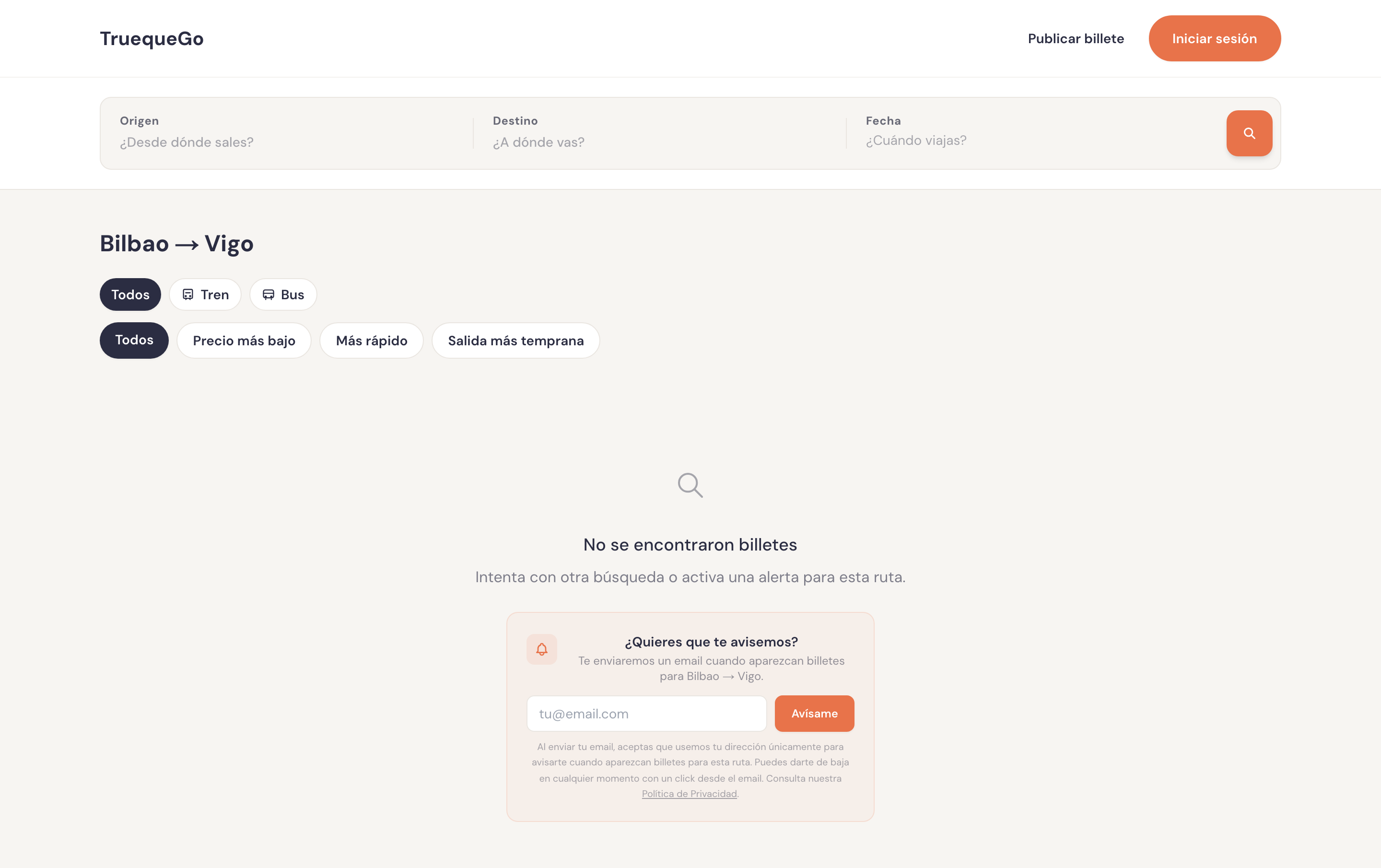
Every route starts empty and stays empty until somebody happens to have a ticket for it. On a two-sided product that is not an edge case to handle later. On day one it is most of the screens anyone will see, so those are the ones that had to be designed properly.
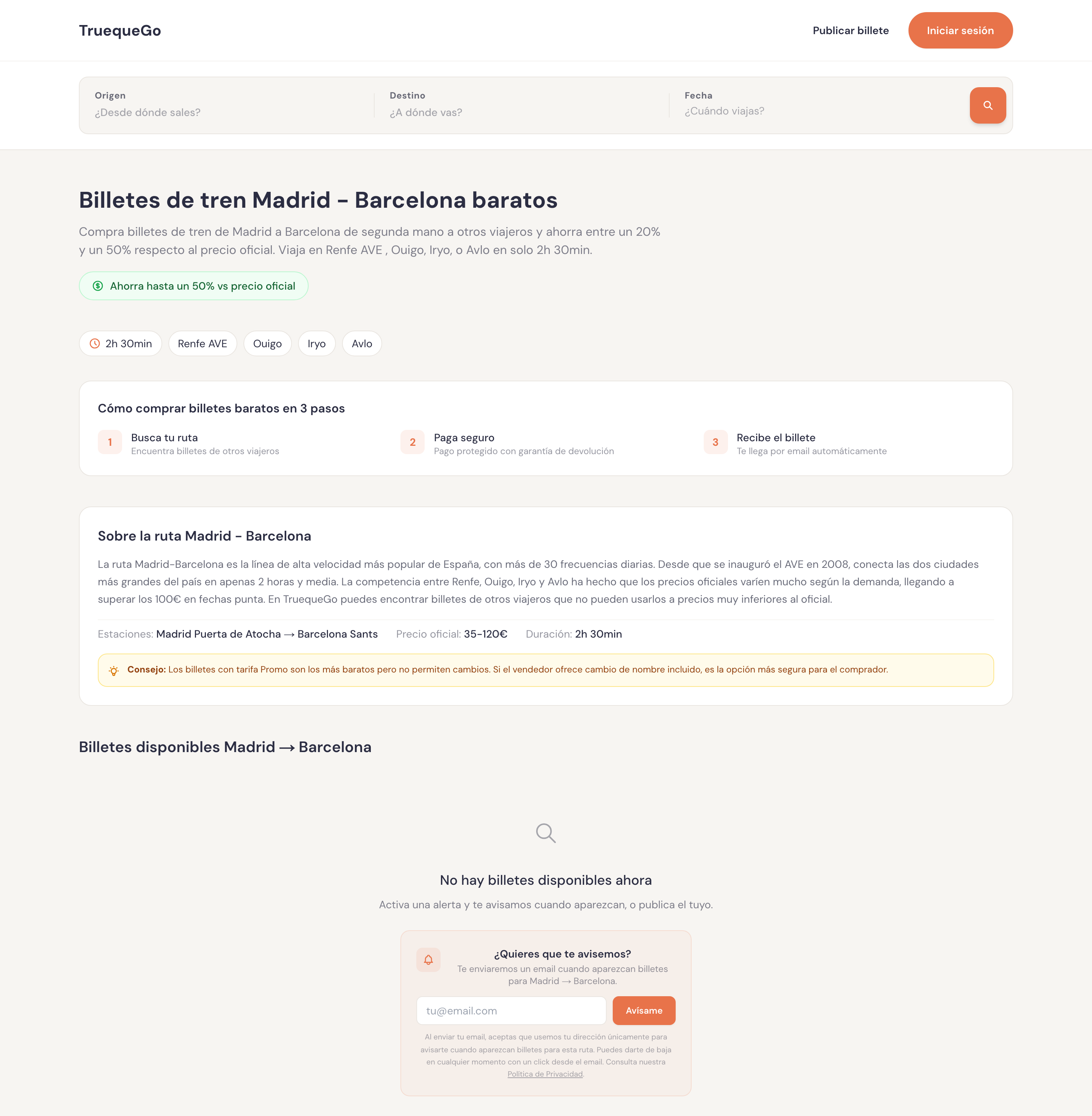
The other half of the answer is where demand arrives from. Twelve routes have their own page, each written to be worth reading with nothing to sell on it: the route explained, the operators, the official price range, and the questions people type into a search box.
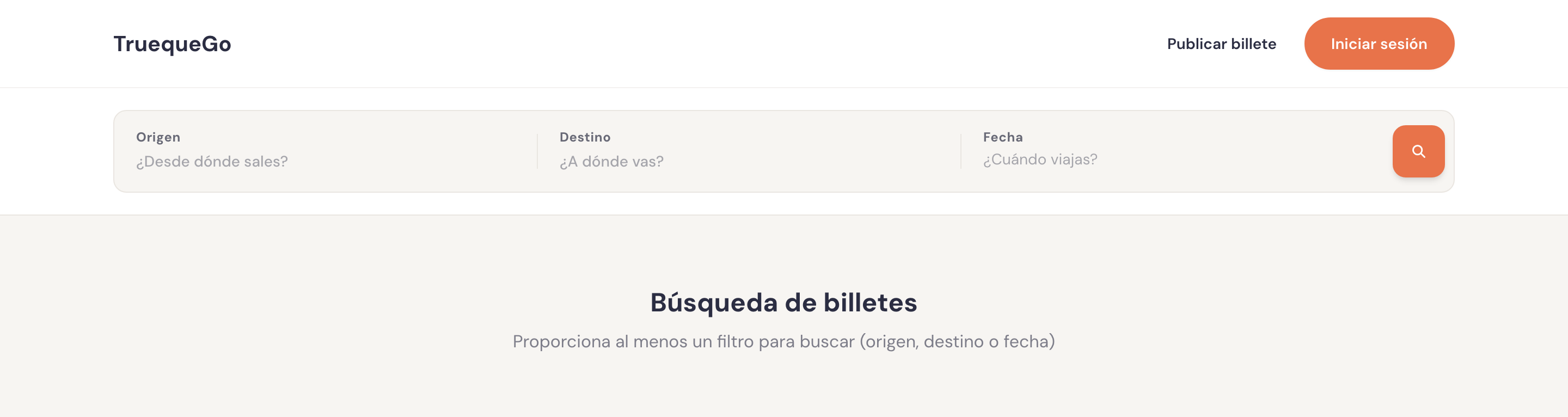
Submitting the bar empty returns neither every ticket in the country nor zero. It states the rule: at least one of origin, destination or date. The bar it refers to is directly above.
The most common result in a young marketplace. It becomes an alert sign-up naming that exact route, with a line offering to sell instead of buy.
The route page still answers the question that brought the visitor. Emptiness costs the middle of the page, not the page.
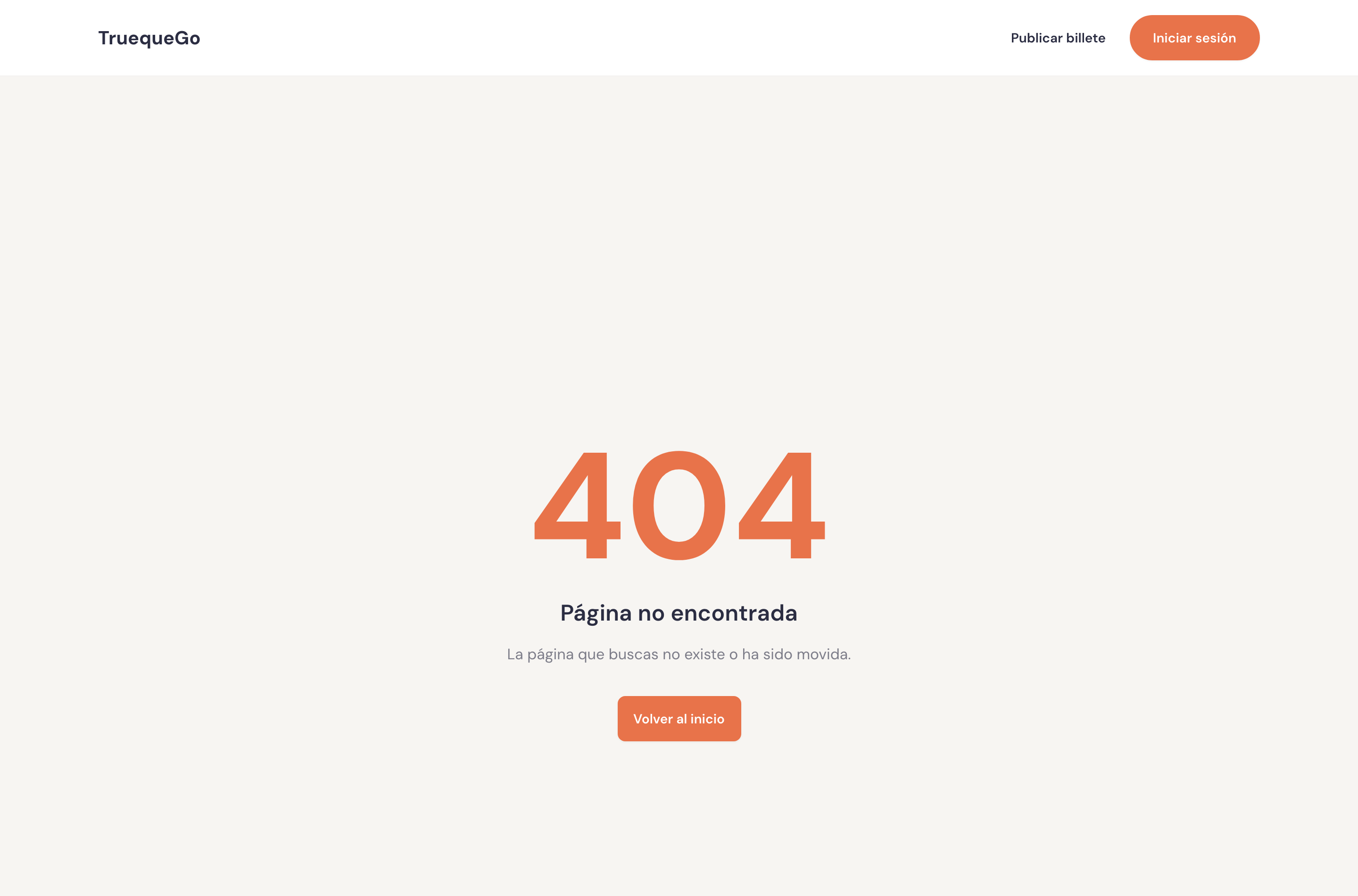
Listings are single items, so links go stale by design as things sell. The 404 puts the way back in the middle of the screen rather than in the header.
Mobile
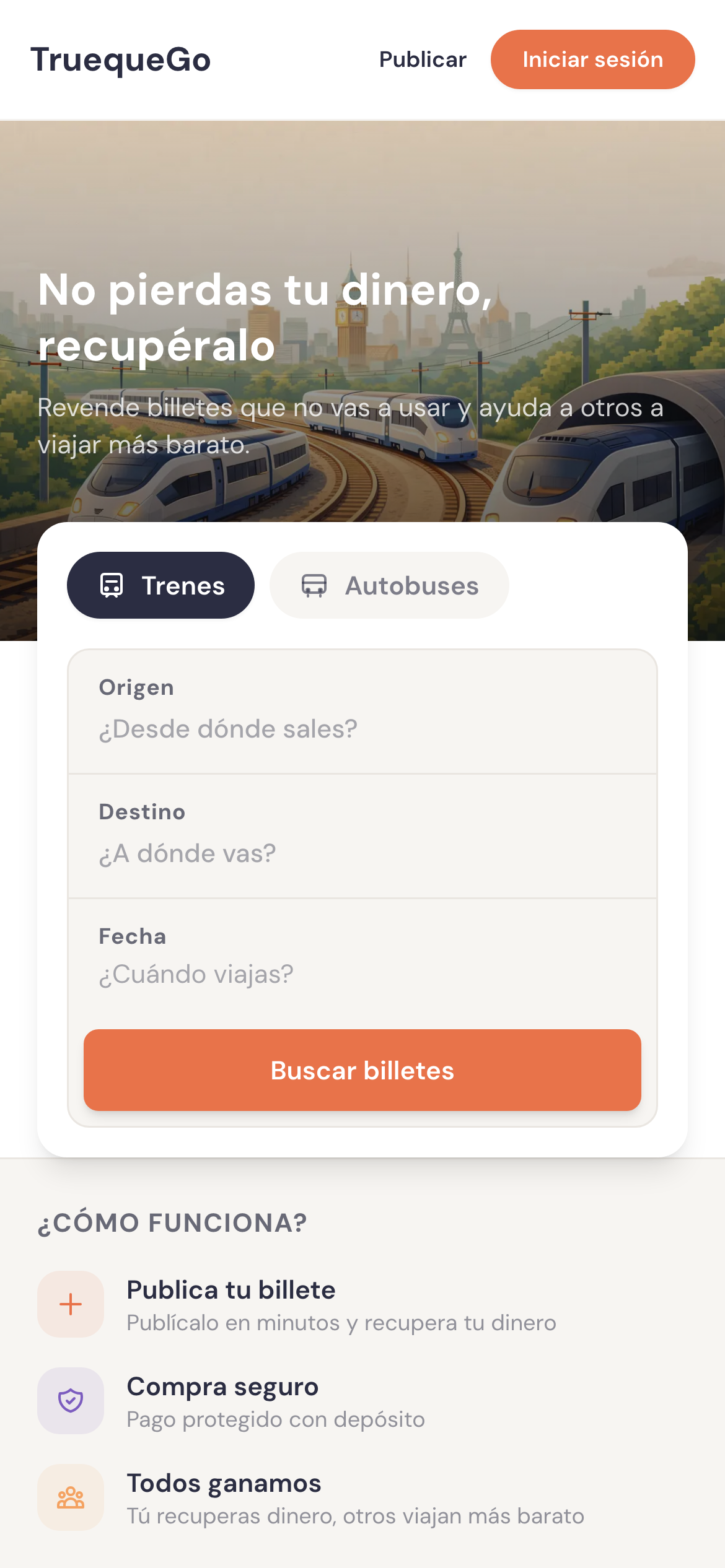
It stacks in the order the decision is made: the train, then the details, then the money.
The build
Money is being held on behalf of two strangers and there is nobody else to catch a mistake, so every choice buys fewer moving parts.
The ticket files decided the storage choice. They are somebody’s name, seat and journey in a PDF, unreachable until a payment clears and then reachable exactly once.
Where it is
TruequeGo is open at truequego.com with real listings across the Spanish high-speed network, every one reviewed by a person before it went up. That is fine at this size and is the first thing that breaks if it works.
The empty half is starting to fill. Traffic has been climbing over the summer, and people are posting tickets without being asked to. The alerts, the route pages and the empty states were built for a shelf with nothing on it, and they are slowly being made unnecessary.
The open question is the other side of the trade. Sellers have found it; buyers have not, in the numbers a marketplace needs. That is the next thing to solve, and it is a distribution problem rather than a design one.